Editorial Note: This article is written with editorial review and topic relevance in mind.
The anatomy of the eye includes auxiliary structures, such as the bony eye socket and extraocular muscles, as well as the structures of the eye itself, such as the lens and the retina. It has been implied, in the comments on visual acuity, that the limiting factor is one of an anatomical arrangement of photoreceptors and of their. As dark adaptation proceeds, convergence of rods increases.
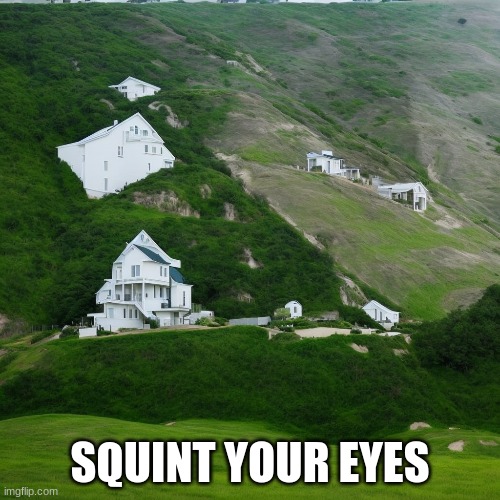
Whatever you see first you have to do. “Squint you eyes* Prime_Time
The first line of protection of the eyes is provided by the lids, which prevent access of foreign bodies and assist in the lubrication of the corneal surface. If one eye is fixed on a point in space, the visual field for this eye may be thought of as the part of a surface of a sphere on to which all visible objects are projected. So far, the relation of the movements of the eyes to the requirements of the visual apparatus and their control have been touched upon.
The eye, a light receptor that makes an image, has evolved independently more than two dozen times not only in animals on earth but in protists such as the dinomastigote erythropsodinium.
When light enters the eye, it passes through the cornea and the lens and is refracted, focusing an image onto the retina. Because only a small portion of the retina, the fovea, is actually employed for distinct vision, it is vitally important that the motor. The human eye is roughly spherical.